
Cedar Tone · Updated September 20, 2026 · Exterior painting
DIY vs. Professional Painting: What You Need to Know
In short: Painting a bedroom yourself is a reasonable weekend project. Painting the outside of a two-story house, spraying cabinet doors, or repainting siding that is peeling to bare wood is where DIY usually costs more than it saves, because the hard part of those jobs is the prep and the repairs, not the paint.
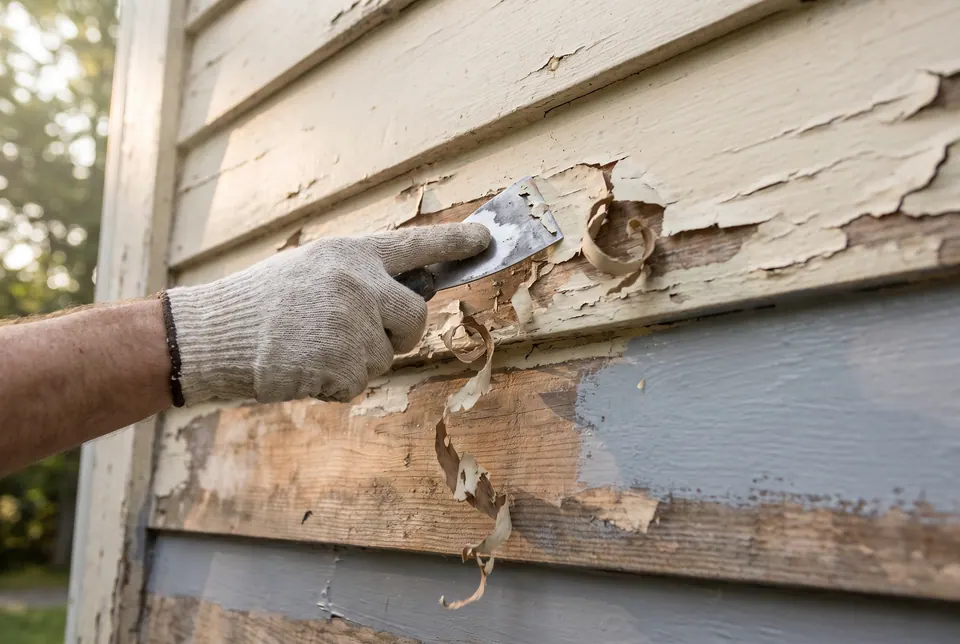
The short answer: Painting a bedroom yourself is a reasonable weekend project. Painting the outside of a two-story house, spraying cabinet doors, or repainting siding that is peeling to bare wood is where DIY usually costs more than it saves, because the hard part of those jobs is the prep and the repairs, not the paint.
Below is how we’d draw the line, and what our crew does differently on the jobs that belong to a pro.
Where DIY painting makes sense
We are not going to tell you every wall needs a professional. Some jobs are well suited to a homeowner with a roller, a decent brush and a free Saturday:
- A single bedroom, office or closet with walls in good shape and no ceiling work.
- A color change on a wall that is already smooth, clean and previously painted with a similar product.
- A basement or laundry room where a lap mark or a wobbly cut line will never bother you.
- A fence or a short run of railing you can reach from the ground.
The common thread is low risk. If the surface is sound and the room is forgiving, a careful amateur can get a result they are happy with. Buy a good angled sash brush, do not skimp on the paint, and cut in before you roll.
Where homeowners get into trouble is scope. A quick repaint of the main floor turns into moving furniture, patching nail pops, discovering the old paint was a different sheen, and finding out the ceiling looks dingy next to the new wall color. Three weekends later the tape is still up. That is a failure of estimating how much of a paint job is something other than painting.
Prep is most of the job, and it is the part people skip
On an exterior, our crew spends more hours on prep than on finish coats, and that ratio is what separates a paint job that lasts from one that peels in two seasons. Here is what prep means on a typical northwest metro house.
Washing. Siding collects a season of pollen, mildew and chalk. Paint will not bond to chalk. We wash, let the house dry, and then start scraping. A homeowner with a pressure washer often does the opposite of what they intend: they drive water into the end grain and behind the laps, then paint over it the next day.
Scraping and sanding. Anything loose comes off. Then the edges of the paint that stayed get feathered so the new coat does not show a ridge. On a 1980s or 1990s two-story in Maple Grove with hardboard lap siding, the bottom edge of each board is where it lets go first, and that means ladder time at every course.
Finding the rot. Before anything gets primed, we go around the house with an awl and push it into the sills, the bottom of the corner boards, the fascia behind the gutters and the trim under every window. Sound wood stops the point. Rotten wood swallows it. Painting over soft wood buys a year at most, and then you have paint failure on top of a bigger repair.
Caulk and prime. Old caulk gets cut out, not painted over. Bare wood gets primed the same day it is exposed, because Minnesota humidity raises the grain and starts the weathering clock right away.
Very little of that shows in the finished photo. All of it shows three years later.
Why the exterior is different in Minnesota
A national article will tell you exteriors are hard because of ladders. That is true, but the bigger issue here is the weather window. Exterior paint needs the siding and the air above roughly 50 F, and it needs overnight lows that stay above the dew point while the film sets. In the northwest metro that gives you a real season from about May to mid-October, and a north wall under trees that may not be dry enough to paint until noon even in July.
A DIY exterior tends to run in fits and starts across that window. You paint the south side in June, get busy, and the north side happens in late September when the mornings are wet and the afternoons are short. The two sides of the house end up with different film quality, and the late side is the one that peels.
Our crew books exteriors in order starting in May and works each house straight through, chasing the sun around the building so every wall gets painted when it is warm and dry. That sequencing is a big part of what you are paying for on an exterior painting job, and it is hard to reproduce on weekends.
Spray and back-brush
Rented airless sprayers are easy to get and easy to misuse. Spraying alone lays paint on the surface. It does not push paint into the wood or the lap joints, and on rough or weathered siding a sprayed-only coat sits on the high spots and skips the grain.
Our standard on siding is to spray and then back-brush while the paint is wet, working it into the surface before it skins over. It takes two people and roughly doubles the labor on the siding, which is exactly why it gets skipped. Trim gets brushed, period. A brushed edge on a fascia board holds up to freeze and thaw better than a sprayed edge.
Overspray is the other hazard. A sprayer in a light breeze will find your neighbor’s truck, your windows and your roof. We mask everything that is not getting painted, which is another chunk of hours that is invisible in the result.
Cabinets belong in a spray booth
Kitchen cabinets are where we see the most DIY regret. Brushed or rolled cabinet doors show every stroke, and wall paint on a cabinet door stays soft enough to fingerprint for months.
On a cabinet painting job we pull the doors and drawer fronts, label them, and spray them off site in a booth with a waterborne enamel that cures hard. The boxes get sprayed in place after the kitchen is masked off floor to ceiling. That is not something you can improvise in a garage in January, and it is the difference between cabinets that look factory-finished and cabinets that look painted.
The repair problem
The biggest reason we’d steer a homeowner away from a DIY exterior is that a painter without a contractor license has to stop when they find rot. A homeowner usually paints over it.
Cedar Tone holds a Minnesota residential building contractor license, which means when the awl goes through a sill or a section of fascia, our crew replaces the board before the primer goes on. Rot repair is written as line items on the estimate, so you know what was replaced and why. On the houses we see across the northwest metro, the usual suspects are window sills on the south and west sides, the bottom of corner boards where snow sits against them all winter, and fascia behind gutters that overflowed under an ice dam. Our rot and trim repair page walks through what that looks like.
An honest way to decide
Three things decide it: whether the surface is sound, whether all of it is safely reachable from the ground or a stepladder, and whether a visible flaw will bother you every day.
If the surface is sound, the reach is easy and the room is forgiving, paint it yourself and enjoy it. If any of those goes the other way, the money you save on labor tends to come back as a shorter life on the paint, a repair that got buried, or a job that sits half done through a Minnesota fall.
Either way, we are glad to walk the house with you and put the repairs and the paint in writing. Send a few photos through our contact page and we’ll get you on the schedule.
Want us to look at your house?
Text a few photos and tell us what you are after. We reply with a written estimate.
Related questionsStraight answers.
Is it cheaper to paint your house yourself?
On labor, yes, for the first coat. The savings shrink fast on an exterior, because you still buy or rent a sprayer, ladders, masking, primer and premium paint, and you have no way to replace rotten trim when you find it. A job that peels in two seasons because prep was skipped costs more than one professional repaint.
What painting jobs should a homeowner not do themselves?
Second-story exteriors, anything with peeling paint down to bare wood, cabinets and doors that need a sprayed enamel finish, ceilings in rooms with tall walls, and any surface with soft or rotten wood behind the paint. Each of those needs equipment, a curing schedule or a repair the homeowner cannot easily reproduce.
Can you paint over rotten wood?
You can, and the paint will look fine for a season. Then it lifts, because the wood underneath keeps taking on water and moving. The right sequence is to replace the rotten board, prime the new wood, and paint. Cedar Tone holds a Minnesota residential building contractor license, so our crew does the replacement before the primer goes on.
Why do painters spray and then brush the siding?
Spraying puts paint on the surface. Back-brushing works it into the wood grain and the lap joints while it is still wet, which is where the bond forms. On weathered or rough siding a sprayed-only coat sits on the high spots and skips the low ones. Brushing behind the sprayer takes a second person and roughly doubles the siding labor, which is why it gets skipped.
How long does a professional exterior paint job take in Minnesota?
Most single-family exteriors in the northwest metro take our crew several working days, weather permitting, with the first day or two spent washing, scraping, repairing and priming. Rain and cold mornings push that out. We work each house straight through rather than in pieces, so both sides of the house get the same conditions.