
Rebuild or restain: how we call it
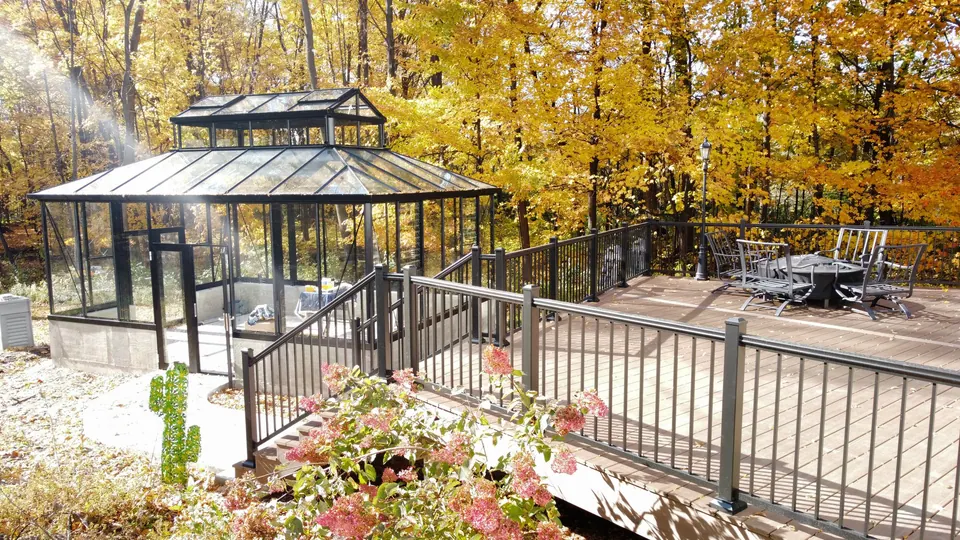
A deck has two parts: the frame you do not see (footings, posts, beam, joists and the ledger bolted to the house) and the surface you do (decking, stairs and railing). The frame decides the question. If the joists are solid when we probe them, the ledger is flashed and bolted, and the posts are on real footings, a gray, splintery deck is a candidate for board replacement and a good stain, which is a fraction of a rebuild. Our deck staining page covers that route. If the joists are soft at the tops where the boards trap water, the ledger has rusted lag bolts or no flashing, or the posts are sitting on patio blocks that have heaved, the frame is the problem and new boards on top of it are money spent twice. We get under the deck at the walkthrough with an awl and a flashlight and show you what we find. The deck in these photos was a rebuild because the frame was as tired as the boards.
- Restain: solid frame, sound ledger, boards gray but not soft
- Repair: solid frame, a handful of rotten boards, a loose post or rail section
- Rebuild: soft joists, an unflashed or unbolted ledger, heaved or missing footings
Frost footings and Minnesota deck basics, in plain words
Minnesota ground freezes deep, and anything sitting on it moves. A deck post on a patio block rises an inch or two every winter and settles unevenly every spring, which is why old decks pull away from the house and stairs go out of level. A proper deck stands on concrete footings poured well below the frost line, which in Wright and Hennepin counties means roughly four feet down, so the frost cannot get under them. The ledger board, where the deck meets the house, is flashed so water cannot get behind the siding and bolted through to the rim joist, not nailed. Joists are sized and spaced for the decking going on top; composite in particular wants closer spacing than old cedar did. Any deck more than a step or two off the ground needs a guard rail with balusters close enough together that a small child cannot fit through, and stairs get a graspable handrail. Cities in the northwest metro require a permit and a footing inspection before framing, and we pull the permit and meet the inspector. None of this is exotic. It is what keeps a deck level and attached to the house twenty winters from now.
Composite versus cedar decking
Both are good decks. They are different commitments. Cedar is the traditional choice around here, it smells right, it costs less on the day, and it can be cut and shaped without special fasteners. It also wants to be stained the first year and every couple of years after, and it will gray and check if it is not. Composite decking (a wood-and-plastic board with a capped surface) costs more up front and never needs stain. It does not splinter, it does not rot, and it cleans with a hose. It gets warmer underfoot in full sun, it needs the joists closer together, and it wants hidden fasteners and proper gapping to look right. The deck in our photos went composite in a warm brown with black aluminum railing, which is the combination most of our rebuild customers land on: they had a wood deck, they are tired of staining it, and they want the next one to be the last one. If you love the look of real wood and do not mind the cadence, cedar is still a fine choice, and we will be the ones staining it.
- Cedar: lower cost, real wood, needs stain on a regular cadence
- Composite: higher cost, no stain ever, cooler colors stay cooler underfoot
- Either one on the same frost-footed, properly flashed frame
Railings, stairs and the finish
Railings decide how a deck looks and how safe it feels. Black aluminum railing, like the one in our after photos, is the current favorite because it is thin, it disappears against trees and a lake, and it never needs paint. Cedar railing with a 2x6 cap is the traditional match for a cedar deck and takes stain with the rest of it. Composite railing systems sit between the two. Stairs get the same treatment as the deck: proper stringers, closed risers where you want them, a handrail you can wrap a hand around, and a landing that is level. On this rebuild the homeowners added a glass-walled gazebo on the deck, which turned it into a three-season room they use through October. When a new cedar deck is done, we are the same crew that stains it, so the first coat goes on at the right time and with the right product for fresh wood. That link between building and finishing is why we do decks at all.
When we would talk you out of it
- A deck with a solid frame and boards that are gray but not soft. You need a wash, a few replaced boards and a good stain, not a rebuild. Our deck staining page is the right place to start.
- A deck that only needs a rotten stair stringer, a loose post or a handful of boards. That is a repair under our rot and trim page, and it is a day, not a project.
- A rooftop deck or a deck over a finished room below. Those need a waterproofing system that is its own trade, and we will send you to someone who does it every week.
What you get
- Frame probed and the ledger checked at the walkthrough, so you hear restain, repair or rebuild with reasons
- Concrete footings below the frost line, permit pulled and footing inspection met
- Ledger flashed and bolted so water never gets behind the siding
- Composite or cedar decking, each on a frame sized for it, with hidden fasteners on composite
- Aluminum, cedar or composite railing and code-safe stairs with a graspable handrail
- New cedar decks stained by the same crew at the right time for fresh wood
How it goes
Walkthrough under and on the deck
We probe the joists, check the ledger and the footings, look at the stairs and railing, and tell you honestly whether it is a restain, a repair or a rebuild.
Design, materials and a written estimate
Size, layout, decking, railing and stairs get settled on paper. The estimate lists the frame, the surface, the railing and any staining as separate lines. We pull the permit.
Tear-off, footings, frame
The old deck comes down, footings are dug and poured below frost, the inspector signs them off, and the ledger, beam and joists go in flashed and bolted.
Decking, railing, stairs, finish, walkthrough
Boards, rail and stairs go on, the site is cleaned, and cedar gets its first stain when the wood is ready. We walk the finished deck with you before we leave.
What does it cost to rebuild a deck in the northwest metro?
A deck is priced by its size and its height first, then by the decking and railing you choose. A ground-level twelve by sixteen with a couple of steps is a small frame and a short railing run. A second-story deck on a walkout lot needs taller posts, deeper bracing, a long stair run and a lot more railing, and the railing is often the largest single line on a deck estimate. Composite decking and aluminum railing cost more than cedar on the day and nothing in stain afterward, so the comparison is fairer over ten years than over one. Tear-off and haul-away of the old deck is its own line. Footings are priced per hole, and rocky or root-filled ground near the lake lots around Buffalo and Greenfield takes longer to dig. Gazebos, built-in benches, lighting and privacy screens are add-ons we quote separately so the base deck number stays clear.
- Square footage and height off the ground
- Number of footings and how hard the ground is to dig
- Decking material: cedar, treated or composite
- Railing type and total length of railing, including stairs
- Stair runs, landings and any built-ins, gazebo or lighting
- Tear-off of the old deck and whether cedar staining is included
From the reviewsWhat customers say about this work
★★★★★We hired Cedar Tone Properties & Painting to paint the exterior of our house and to repair some roofing on the peak of our house (which was done incorrectly by a different roofing company). CTP did excellent work on both projects. The painting crew was meticulous and accommodating. They made sure we were completely happy with the final result. The roofing crew matched the shingles perfectly and finished the roof peak correctly. Our house looks wonderful! We are extremely satisfied with Cedar Tone and recommend them for your painting or roofing needs.
★★★★★Cedar Tone did an excellent job painting both our home’s interior and exterior. They went above and beyond by both repairing and staining the exterior siding. We’ve used them twice and would highly recommend them.
Questions we get on the phoneStraight answers.
Should I rebuild my deck or just restain it?
It depends on the frame, not the boards. If the joists are solid, the ledger is flashed and bolted and the posts sit on real footings, gray and splintery boards can be replaced as needed and the deck restained for far less than a rebuild. If the joists are soft, the ledger is failing or the footings have heaved, new boards on that frame are money spent twice. We get under the deck with an awl at the walkthrough and show you which one you have.
Do I need a permit to build a deck in Minnesota?
Almost always, yes. Cities across the northwest metro require a building permit for a new deck or a rebuild, and an inspector checks the footings before the frame goes up and the finished deck at the end. We pull the permit and meet the inspector as part of the job. The permit is a good thing for you: it means the footings are below frost, the ledger is attached correctly and the railing meets the safety rules, and it shows up cleanly when you sell the house.
Is composite decking worth it over cedar?
For most people who are rebuilding because they are tired of maintaining a wood deck, yes. Composite costs more up front and never needs stain, does not splinter and does not rot. Cedar costs less on the day, looks like real wood, and wants stain the first year and every couple of years after. Over ten years the gap narrows. We install both and stain cedar ourselves, so we do not have a reason to steer you either way beyond how you want to spend your weekends.
How long does a deck rebuild take?
A typical rebuild runs about a week to two weeks of site time, spread around the footing inspection and the weather. Tear-off and footings take the first day or two, then the inspector needs to see the holes before we pour and frame. Framing, decking, railing and stairs follow. A large second-story deck with a long stair run and a gazebo takes longer. New cedar also needs a few weeks to dry before its first stain, which we schedule separately. We put an expected timeline on the estimate.
Can you stain the new deck too?
Yes, and on a cedar deck we prefer to. New cedar needs to weather for a few weeks before it will take stain, and the first coat sets the deck up for the next decade. We come back at the right time with the right product for fresh wood and put it on properly. Composite does not need stain at all. Our deck staining page covers products, timing and the cadence for cedar, and the same crew that built your deck will be the crew staining it.
Related
Where we do this work
Decks from our shop in Rockford across Greenfield, Delano, Corcoran, Buffalo, Medina, Rogers, St. Michael and Albertville, and the rest of the northwest metro. See the full service area.