
Buffalo Lake and Lake Pulaski: what water does to siding
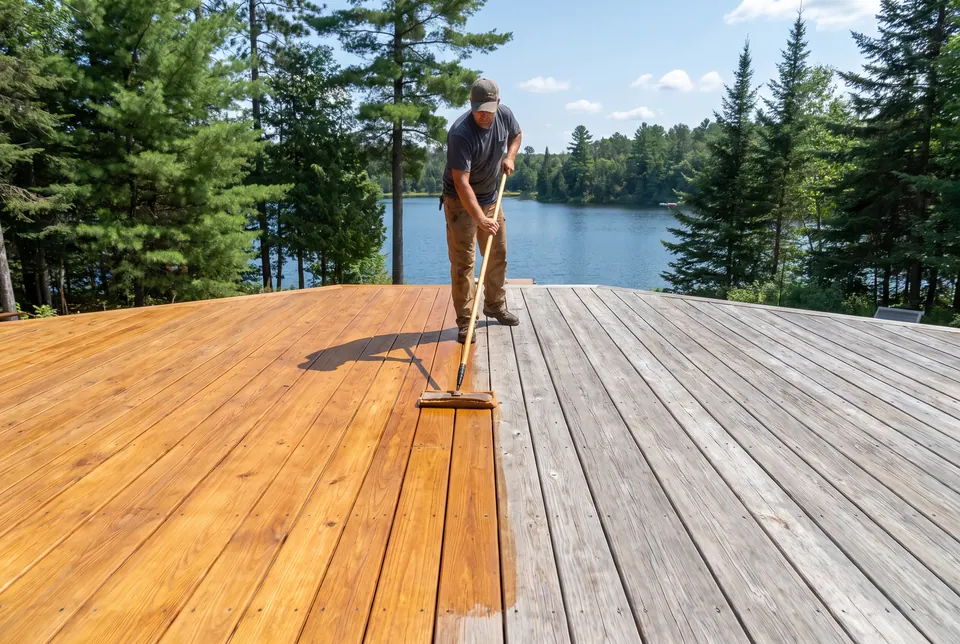
A lake home in Buffalo has one wall that behaves differently from the other three. The side facing the water sees fog and dew most mornings from spring through fall, so it stays wet hours longer than the street side. That is where we find mildew on the siding, peeling on the bottom courses, soft window sills and rotten deck boards. The homes on Buffalo Lake are a mix of older cottages that were added onto over the decades, 1970s and 1980s year-round houses with cedar and hardboard, and newer builds with LP SmartSide. Around Lake Pulaski the stock is similar, with more 1990s and 2000s homes on the newer lots. On any of them, we wash the lake wall with a mildewcide, give it an extra drying day, prime every bit of bare wood and use a paint or stain that can handle wet-dry cycling. Decks and docksides get a stain chosen for standing water, and we schedule them for the driest stretch of the job.
Buffalo's in-town homes and the newer subdivisions
Downtown Buffalo is the Wright County seat, and the blocks around it have housing from the late 1800s forward: wood-sided two-stories and bungalows with tall trim, porches and a century of paint. Those need the full prep, scraping to a sound edge, feather-sanding, priming bare wood, caulking, and brushed trim so the millwork keeps its profile. Ringing that core are 1950s through 1970s ramblers and splits with a mix of wood lap, hardboard and early aluminum siding. Farther out along Hwy 55 and Hwy 25 are the 1990s and 2000s subdivisions, mostly two-stories and splits with hardboard, vinyl and first-generation LP siding that is now at the age where the factory finish chalks and the bottom edges swell. Those are the homes we see most on estimates, and the question is always the same: how many boards are still hard. Hard boards get washed, primed and painted. Swollen boards get replaced before paint.
How we work in Buffalo
Buffalo is about 15 minutes west of our Rockford shop on Hwy 55, a direct enough trip that we run color samples, second looks and touch-ups without a long gap. Lake homes have their own logistics: tight lakeside lots, steep grades to the water, docks and lifts to work around, and a lot of glass on the water side. We set ladders and lifts with the slope in mind, mask the windows and doors on the lake wall, and keep wash water and paint out of the lake. Exterior season in Buffalo runs from roughly May to mid-October, with the lake walls held for the driest days. Anything rotten we find is repaired under our contractor license and written up as its own line so you can see the cost of the repair apart from the paint.
Exterior painting in Buffalo
Between the two lakes and the older downtown, Buffalo is an exterior painting town for us, and the lake wall is where most of the prep hours go. Our exterior painting page covers the wash, scrape, repair, prime and two-coat process and what pushes the cost up on a lake home versus a subdivision house. How an exterior repaint goes, and what moves the cost. Rotten trim and siding get replaced first by our own crew under our contractor license, see rot and trim repair.
Interior painting and cabinets in Buffalo
Buffalo's lake homes turn inside in winter: knotty pine that someone wants painted white, cabinet enamel on a 1990s oak kitchen, ceilings stained by an old roof leak that we patch, retexture and repaint. The in-town older homes bring plaster repair and brushed trim. We keep a crew on interior and cabinet work from November through April. See interior painting and cabinet and trim enamel.
Where in Buffalo we work
- Downtown Buffalo
- Buffalo Lake
Services in Buffalo
Painting
- Exterior painting
- Interior painting
- Cabinet painting
- Staining and sealing
- Deck staining
- Commercial painting
Exteriors and build
Google reviewsWhat customers say
★★★★★The team that worked on our inspection and quote were thorough and well organized. They did a very professional job in masking and preparation which showed in the quality of the final paint. We would not hesitate to use them in the future.
★★★★★We have an old wooden house and they used good judgement and did a great job on the repairs they did on the siding as well as the actual painting. When they were done, it looked like a new house! They were responsive to our requests, were polite and unobstrusive on the job and we are very satisfied with the work they did.
Straight answersPainting questions from Buffalo
Do you paint lake homes on Buffalo Lake and Lake Pulaski?
Yes, and they make up a good share of our Buffalo work. The lake-facing wall gets a mildewcide wash, an extra day to dry, primer on any bare wood and a finish that handles wet-dry cycling. Decks on the water get a stain chosen for standing moisture. We set up for the slope and the dock and keep everything out of the lake. Expect the lake side to take longer than the street side; that is normal.
Our Buffalo deck faces the lake and the stain peels every two years. What would you do differently?
Strip it back to bare wood instead of coating over the old stain, then use a penetrating semi-transparent stain rather than a film-forming product. Film-forming stains peel on lake decks because water sits on them and works under the film. A penetrating stain wears rather than peels, and recoating it later is a wash and a coat, not a strip. We also replace any soft boards under our contractor license before staining.
Can you handle the old wood-sided houses near downtown Buffalo?
Yes. Those homes want the full prep: scraping to a sound edge, sanding the edges flat, a bonding primer on bare wood, caulk at the joints that opened up, and brushed trim so the profiles stay sharp. Older paint may contain lead, and we prep those homes with the containment and cleanup the rule requires. Sills, porch boards and columns are usually where the rot is, and we replace them before paint.
The hardboard siding on our 1990s Buffalo home is swelling at the bottom. Paint or replace?
It depends on how many boards have gone soft. We check every bottom course and the boards under the windows on the walkthrough. If a handful are swollen, we replace those boards, prime and paint the rest, and the house is good for years. If a whole wall is soft, painting is throwing money at siding that is done, and we will tell you so and talk about replacement options instead.