
Semi-transparent or solid: what each one does
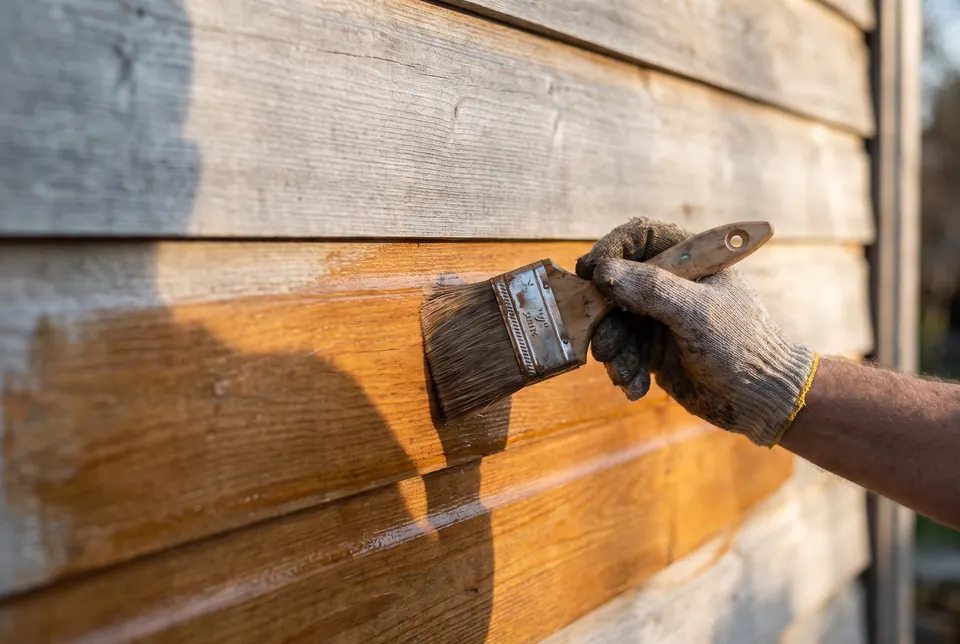
Semi-transparent stain is a penetrating finish with a little pigment in it. It soaks into the cedar, lets the grain and color variation show, and does not form a film, so it wears away gradually rather than peeling. That is the look most people want on a cedar house, a fence or a timber-frame entry, and it is the easiest finish to maintain, because the next coat goes right over the old one after a cleaning. The trade is that it needs recoating sooner. Solid stain has enough pigment to hide the grain and look like a flat paint, while still soaking in more than paint does. It lasts longer between coats, hides old sun damage and mismatched boards, and is the usual choice when cedar siding has already been solid stained or painted, because once a film has been on the wood you cannot go back to semi-transparent without stripping. There is a middle ground called semi-solid that hides more than semi-transparent and wears more gracefully than solid. We bring samples and brush them on the least visible wall so you see them on your own wood.
- Semi-transparent: grain shows, no film, no peeling, shorter recoat cycle
- Semi-solid: hides more, still penetrates, middle cycle
- Solid: hides grain like paint, longest cycle, hard to go back from
When stain beats paint on cedar, and when it does not
Cedar that has never been painted is a candidate for stain, and on that wood stain is the better product. Cedar moves with the seasons, and Minnesota gives it a lot of seasons. A penetrating stain moves with it. A paint film does not, so paint on bare cedar tends to crack at the board edges and peel in sheets after a few freeze-thaw cycles, especially on the south and west walls. Stain fades instead of peeling, and fading is fixed with a wash and a coat. Where paint wins is cedar that has already been painted for years, cedar that is badly weathered and patched with mismatched boards, or a house where the owner wants a color that stain does not come in. You can paint over old stain with the right primer. You cannot stain over old paint without stripping it to bare wood, which on a whole house is rarely worth it. A reviewer with hail-damaged redwood siding described the prep this way: "They were careful and deliberate, and went above and beyond in siding prep so that the final project turned out beautifully." (J. V. E. · Google review). That job was stain, chosen because the wood had never been painted.
Prep: clean, brighten, dry to under 15 percent
Stain only works on wood that is clean, open and dry, so most of a staining job is getting the wood there. First we wash the cedar with a cleaner that lifts mildew, algae, dirt and the gray layer of dead wood fibers that the sun leaves on any board that has gone a few years without a coat. On heavily weathered or previously stained wood we follow the cleaner with a brightener, which neutralizes the cleaner and brings the cedar back to its natural color so the new stain reads true. Then we wait. Cedar has to dry to under 15 percent moisture before stain goes on, or the stain sits on top of the water in the wood and fails within a year. We check that with a moisture meter, not by guessing, and in a wet June that can mean two or three days between the wash and the first coat. Loose boards get refastened, splits get evaluated, and any cedar too far gone gets replaced by our crew under our contractor license, with the new boards allowed to weather a few weeks before they take stain the same way as the old. Then the stain goes on by brush and pad, back-brushed on siding, with a wet edge kept along each board so there are no lap marks.
- Wash with a wood cleaner to lift mildew and gray fibers
- Brighten to neutralize and restore the cedar color
- Dry to under 15 percent moisture, measured with a meter
- Refasten, replace and back-brush with a wet edge
Recoat cadence, honestly
Stain lasts a shorter time than paint, and anyone who tells you otherwise is selling. Semi-transparent stain on vertical cedar siding in this climate is typically good for a few years before the south and west walls start to lighten, and a fence or a timber post in full sun goes sooner than that. Solid stain lasts longer, closer to paint, but still needs attention before it wears through at the bottom edges. The upside is that a recoat on stained cedar is a small job: wash, let it dry, one coat. There is no scraping, because there is nothing to peel. Homes that stay on that cycle keep looking new indefinitely. Homes that skip two cycles end up gray, and then the prep is back to cleaner and brightener and two coats. We keep a note of when we stained your house so we can call before it gets to that point, if you want us to.
When we would talk you out of it
- Cedar siding that has been painted for years and is peeling. Getting it back to bare wood for semi-transparent stain means stripping the whole house, which is rarely worth it. Paint over a bonding primer, or solid stain, is the practical answer.
- Boards that are cupped, split through, or soft at the bottom edge. Stain will not hold them together. Those get replaced by our crew first, and if it is most of a wall, we quote siding instead.
- A fence or deck you want stained the same week it was built. New cedar needs a few weeks to weather so the surface opens up and takes stain evenly. We will schedule it for later in the season.
What you get
- Semi-transparent, semi-solid or solid stain matched to the wood and the look you want
- Wood cleaner and brightener before every stain job, never a pressure wash alone
- Moisture checked with a meter, under 15 percent before the first coat
- Split or rotten cedar replaced by our own crew under our contractor license
- Back-brushed with a wet edge so boards read even, no lap marks
- Straight talk about recoat cycles so you can plan the next visit
How it goes
Walkthrough, samples and written estimate
We look at the cedar, check whether it has ever had a film on it, test moisture, and brush stain samples on an out-of-sight wall. The estimate lists staining and any board replacement separately.
Clean and brighten
The cedar gets washed with a wood cleaner, then brightened to neutralize the cleaner and bring the color back. Loose boards are refastened and bad ones replaced.
Dry, then stain
We wait for the wood to read under 15 percent on the moisture meter, then apply stain by brush and pad, back-brushed on siding with a wet edge kept along each board.
Second coat where the product calls for it, then walkthrough
Solid stains and some semi-transparents get a second coat once the first has soaked in. Then we walk the house with you and note the recoat cycle for your records.
What does cedar staining cost in the northwest metro?
Staining is priced from the same walkthrough as painting, and the same things move the number: how much cedar there is, how high it is, and what condition it is in. A house that was stained a few years ago and needs a wash and one coat is at one end. A gray, mildewed house that has gone a decade without a finish needs cleaner, brightener, dry time, board replacement and two coats, and sits at the other. The product matters. Solid stain covers in fewer coats on old wood than semi-transparent does, but semi-transparent goes on faster on clean cedar. Fences and timbers are priced by length and size. Board replacement is always its own line, and since our crew does it under our contractor license, there is no second contractor to schedule or pay. The estimate is written and the walkthrough costs nothing.
- Square footage of cedar and how much of it needs staging
- Condition: recently stained versus gray and weathered
- Whether the wood has ever had a paint or solid-stain film on it
- Semi-transparent, semi-solid or solid, and the number of coats
- Board replacement, quoted separately
- Fences, timbers, gates and trim included in the same visit
From the reviewsWhat customers say about this work
★★★★★Cedar Tone did an excellent job painting both our home’s interior and exterior. They went above and beyond by both repairing and staining the exterior siding. We’ve used them twice and would highly recommend them.
★★★★★We have an old wooden house and they used good judgement and did a great job on the repairs they did on the siding as well as the actual painting. When they were done, it looked like a new house! They were responsive to our requests, were polite and unobstrusive on the job and we are very satisfied with the work they did.
Questions we get on the phoneStraight answers.
Should I stain or paint my cedar siding?
If the cedar has never been painted, stain. It moves with the wood through Minnesota freeze-thaw cycles, fades instead of peeling, and recoats with a wash and a coat. If the cedar has been painted for years, paint over a bonding primer or switch to solid stain, because stripping a whole house to bare wood is rarely worth it. We will tell you which one you have at the walkthrough.
How often does cedar siding need to be restained?
Sooner than paint. Semi-transparent stain on cedar siding here is typically good for a few years before the sunny walls start to lighten, and fences and timbers in full sun go sooner. Solid stain lasts longer, closer to paint. The recoat itself is small: wash, dry, one coat, no scraping. Skip two cycles and the prep goes back to cleaner, brightener and two coats.
What is the difference between semi-transparent and solid stain?
Semi-transparent stain soaks in, shows the grain, forms no film, and wears away instead of peeling, so it is easy to recoat but needs it sooner. Solid stain has enough pigment to hide the grain like a flat paint, lasts longer, and covers old damage, but once it is on you cannot go back to semi-transparent without stripping. Semi-solid sits between them.
Why does the wood need to be dry before staining?
Because stain has to soak into the wood, and it cannot if the pores are full of water. Cedar stained above about 15 percent moisture looks fine for a season and then blotches, peels or grows mildew under the finish. We check with a moisture meter after the wash and wait as long as it takes, which in a wet stretch of June can be a few days.
Can you stain fences and timbers too?
Yes. Cedar and redwood fences, timber posts and beams, pergolas, log accents and cedar gable trim get the same cleaner, brightener, dry time and stain as siding. Fences and horizontal timbers take more sun and weather than a wall, so they need recoating sooner, and we will say so. New cedar should weather a few weeks before its first coat.
Related
Where we do this work
Staining and sealing from our shop in Rockford across Greenfield, Delano, Corcoran, Buffalo, Medina, Rogers, St. Michael and Albertville, and the rest of the northwest metro. See the full service area.