
Cedar Tone · September 20, 2026 · Exterior painting
When Is Exterior Painting Season in Minnesota?
The short answer: Exterior painting season in Minnesota runs from roughly early May to mid-October. Paint needs the siding and the air above about 50 F, and it needs the overnight low to stay above the dew point while the coat sets, which rules out most of April and everything after the first hard frost. We book exteriors in order starting in May, and by early summer the calendar is full.
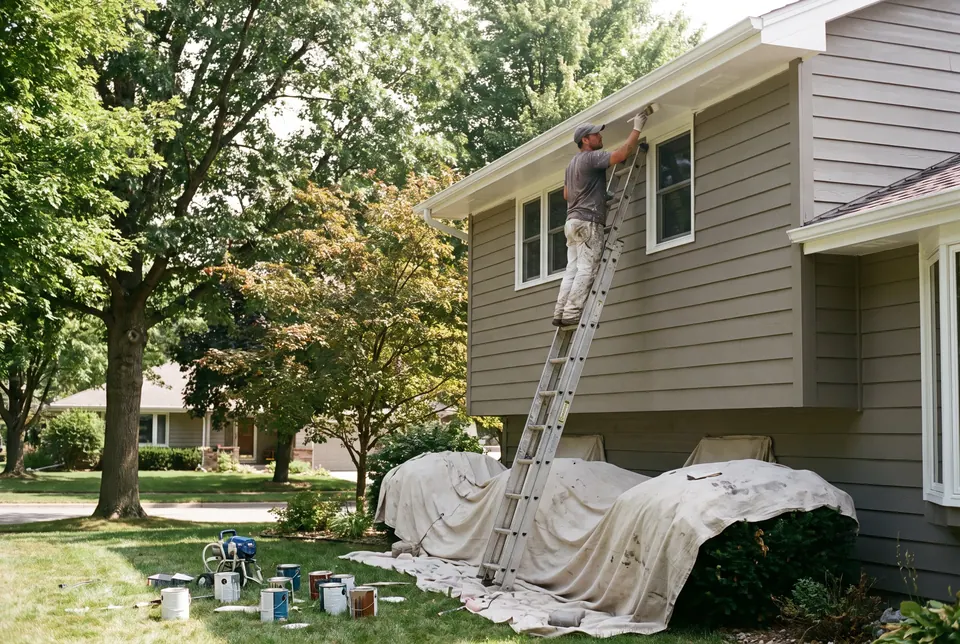
The short answer: Exterior painting season in Minnesota runs from roughly early May to mid-October. Paint needs the siding and the air above about 50 F, and it needs the overnight low to stay above the dew point while the coat sets, which rules out most of April and everything after the first hard frost. We book exteriors in order starting in May, and by early summer the calendar is full.
Every March the phone starts with people who want the house painted as soon as it warms up. We understand. But paint does not care about the calendar. It cares about two numbers, and here is how we read them across a northwest metro season.
The two numbers: surface temperature and dew point
Standard exterior paint is made to be applied with the air and the surface above about 50 F, and it wants to stay above that for a day or so afterward while the film forms. Below that, the resin does not coalesce into a continuous film. The coat can look fine the day it goes on and then fail early: poor adhesion, a chalky surface, a film that never gets hard.
The second number is the dew point. When the siding cools to the dew point overnight, water condenses on it. If the paint has not fully set, that water gets into the film. The visible result is surfactant leaching, shiny or brownish streaks running down the siding the next morning. It usually washes off in time, but on a bad night it causes blistering, and either way it is a coat we would rather not have put on.
So a good painting day is not a warm day. It is a day where the wall is above 50 F when the paint goes on, and the night stays well above the dew point until the paint has set.
The wall matters more than the forecast
Surface temperature is the number homeowners miss, and it is why we do not paint by the weather app.
Siding holds cold. On a 58 F morning in early May, a north wall under trees can still be in the low 40s at ten o’clock and may not reach 50 F until mid-afternoon. The reverse happens in July, when a west wall in full sun can run 20 or 30 degrees hotter than the air, hot enough that paint flashes off before it levels and leaves lap marks.
Our crew plans each day around which walls are ready. In the shoulder months that means the sunny walls in the morning and the shaded walls after lunch, and nothing on any wall after about three o’clock once the sun drops and the surface starts sliding toward the dew point. In summer it means chasing the shade so nobody is spraying a wall that is too hot to touch. We spray and back-brush siding, which needs the paint to stay wet long enough to brush, and a hot wall takes that away.
Month by month in the northwest metro
April. Too early for finish coats most years. Nights freeze, and the ground is still releasing moisture. We use dry April days for washing, scraping, sanding, caulk and repairs, and for priming bare wood with a primer rated for the temperature. Prep in April, paint in May.
May. The season opens, usually the first or second week. Surfaces are cold in the morning, so the day starts on the south and east walls and moves to the north side as it warms.
June through August. The core. Long days and warm siding. The limits become heat and thunderstorms. We watch the radar and stop an hour before rain, because a coat that gets rained on in its first hours is a coat we redo.
September. Often the strongest month: warm days, cool nights, dry air. The dew point starts to matter again in the second half, and the paintable hours start shrinking.
Early October. Workable with attention. Sunny walls in the afternoon, north walls only on the warmest days, and a hard look at the ten-day forecast before starting anything.
Mid-October on. Standard paint is done. Cold-rated products can stretch a good week, but frost on the siding in the morning is the end of the line no matter what the can says.
Why the schedule fills in order
The season is about five and a half months long, and rain, cold mornings and repairs take a chunk of it. That means the number of houses a crew can paint well in a Minnesota summer is fixed, and it is smaller than the number of people who want one.
We book exteriors in the order requests come in. A walkthrough in February gets the estimate written, the rot repairs listed as line items, and the house placed in line. The first houses on the list get painted the first week the siding is warm enough in May. By early summer, most of the season is spoken for, and someone calling in July is usually looking at September or the following spring.
Booking early also makes the job better. We can wash and prep on a dry week in April, let the replaced wood and new caulk cure, and paint in May or June instead of squeezing prep and paint into the same hot week.
Which houses paint first
Within the order, the weather decides the details. Early in the season we start with houses on open lots with good sun on all four sides, because every wall gets warm enough in a day. Wooded lots and lake houses come a few weeks later.
A house on the shore of Buffalo Lake or Lake Pulaski in Buffalo sees more morning fog and slower drying in May and September than a house on an open acreage lot outside town. Out along the Mississippi in Monticello, the river side of the house holds dew later into the morning. Neither is a problem in July. Both push a house toward the middle of the season rather than the ends.
The other thing that moves a house earlier is being ready. If the rot repairs and the color are settled at the walkthrough, the crew can start the first good week. If the trim needs a rot and trim repair conversation and the color is still two chips on the kitchen counter, the house waits for the next slot.
The fall cutoff
People ask whether October is too late, and the honest answer is that it depends on the week, not the date. A stretch of 60 F afternoons with nights in the mid-40s and dry air is fine painting weather, and we finish jobs in those weeks every year. A week of 48 F highs and cold rain is not, even on October 2nd.
What changes in October is the margin. Paintable hours shrink to late morning through mid-afternoon. Overnight lows get near the dew point more often. And there is no warm week coming to bake out a marginal coat. So in October we check the ten-day forecast before committing, we do not start a wall we cannot finish and let set the same day, and we will push a job to spring rather than force the last wall on a bad week. The last wall painted in a rush is the first one to peel, and it is always the north side.
Cold-rated exterior paints, made to form a film down to about 35 F, are real products and we use them when a job runs late. What they do not fix is moisture. They still cannot go on a damp wall, and they still need the surface to stay above their rating until they set. A 35 F rating makes a good October day usable. It does not make November painting season.
What we do in winter
From November to April, the crew moves inside. That is interior painting: walls, ceilings, trim and doors, with the furnace fan running and a window cracked for air. Cabinet doors and drawer fronts get pulled and sprayed in our booth off site, which does not depend on the weather at all. Water-damaged ceilings from last winter’s ice dams get repaired and retextured.
Winter is also when we walk exteriors for the coming season. The siding is cold and the paint is not going on, but the awl still tells us which sills and corner boards are soft, the estimate gets written, and the house goes on the list in order. If you want a specific month next summer, a walkthrough before the snow is gone is how you get it.
To get on the list for next season, or to talk about the work that can happen inside now, reach us through the contact page.
Want us to look at your house?
Text a few photos and tell us what you are after. We reply with a written estimate.
Related questionsStraight answers.
What is the earliest you can paint a house exterior in Minnesota?
Usually the first or second week of May in the northwest metro, and only on the sunny walls. The air may hit 60 F in late April, but the siding is still cold from the night and the ground is still throwing moisture. We use April for washing, scraping, repairs and caulk on dry days, and start finish coats when the siding itself holds 50 F into the evening.
What temperature is too cold to paint outside?
Below 50 F on the siding, not only in the air, for standard exterior paint, and below about 35 F even for products rated for cold. The other limit is the overnight low: if it will drop near the dew point before the paint has set, the coat gets wet from dew and streaks or blisters. A 55 F afternoon with a 38 F night is not painting weather.
Is it too late to paint a house in October in Minnesota?
Not always. Early October often has usable weeks with dry afternoons in the 50s and 60s. We finish jobs then, watching the ten-day forecast and stopping any wall we cannot finish and let set the same day. After about mid-October the paintable hours shrink to a few in the afternoon and frost shows up on the siding, so full repaints move to spring.
When should I book exterior painting for the summer?
Late winter. We schedule exteriors in the order requests come in, starting the first week the siding is warm enough in May, and by early summer most of the season is spoken for. A walkthrough in February or March gets the estimate written and the repairs listed, and it puts your house in line before the calendar fills.
Does Cedar Tone paint in the winter?
Inside, yes, all winter. Walls, ceilings, trim and doors happen in the house, and cabinet doors get sprayed off site in our booth. Outside, no. The only exterior work we do between November and April is estimates and walkthroughs, which is exactly the right time to get on the spring list.