
Cedar Tone · Updated September 20, 2026 · Rot and trim repair
Fall Home Maintenance Checklist: Painting, Caulking and Repairs
In short: Fall in Minnesota is for sealing the house before freeze-up: recaulk the joints that opened over summer, replace any trim or fascia that has gone soft, and get primer on bare wood while the siding is still above 50 F in the afternoon. Full repaints belong in summer. Fall is for the small repairs that keep water out of the wood until spring.
The short answer: Fall in Minnesota is for sealing the house before freeze-up: recaulk the joints that opened over summer, replace any trim or fascia that has gone soft, and get primer on bare wood while the siding is still above 50 F in the afternoon. Full repaints belong in summer. Fall is for the small repairs that keep water out of the wood until spring.
Here is the list our crew works through on our own houses in September and early October, in the order it matters.
Why fall matters more here than in most places
Water that gets into a joint or a piece of bare wood in October does not drain out in November. It freezes. Ice expands, the joint opens wider, the ice melts on the next sunny afternoon and more water gets in. By March a hairline crack in the caulk under a window has become a gap, and the sill behind it has been wet for five months.
The other Minnesota mechanic is snow against the house. The bottom course or two of siding, the bottom foot of every corner board, and the trim beside the garage door sit in a snowbank from December to March. Any bare wood or open seam down there is soaking the whole time.
So the point of fall maintenance is simple: close every path water can take into the wood before the first hard frost, and do it while the surfaces are still warm enough for caulk and primer to cure.
1. Walk the house with an awl
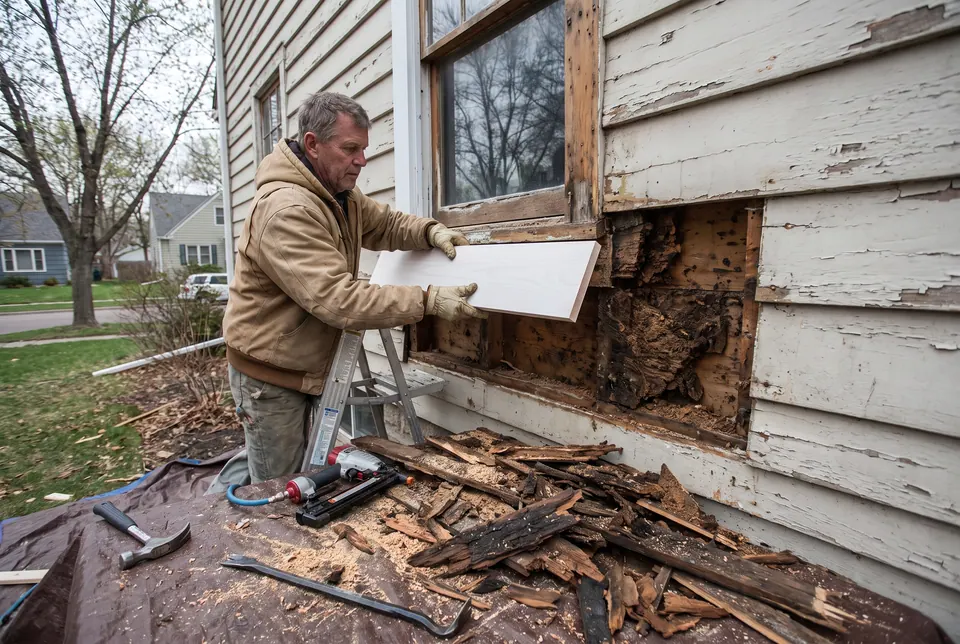
Before anything else, go around the house with a screwdriver or an awl and push it into the wood everywhere water sits. Our crew does this on every estimate, and it is the step that finds the expensive problems while they are still small.
Probe these spots, sunny sides first:
- The bottom of every window sill, especially where the sill meets the side casing.
- The bottom foot of each corner board.
- The fascia behind and below the gutters, and anywhere the gutter has overflowed.
- The trim on either side of the overhead garage door and the bottom of the service door jamb.
- Deck post bases, the ledger board against the house, and the ends of the stair stringers.
- The bottom of any wood column or porch post.
Sound wood stops the point. Rot lets it sink in with almost no push. If you find soft wood, mark it. That board needs to come out, not get filled and painted. Cedar Tone holds a Minnesota residential building contractor license, so rot and trim repair is part of the same visit as the paint, and each replaced board shows up as a line item on the estimate.
2. Recaulk the joints that opened
Caulk fails on a schedule. The joints that move most, and therefore open first, are:
- Where window and door trim meets the siding.
- Where the corner boards meet the siding.
- Butt joints between lengths of lap siding, especially on hardboard.
- Where a deck ledger or a light fixture penetrates the wall.
Cut the old caulk out. Painting over failed caulk or laying a new bead on top of a cracked one lasts a season at most. Use an exterior-grade product rated for the movement, and give it a dry surface above about 40 F with a few hours before the temperature drops. We caulk the south and east sides in the morning and the north and west after lunch on cool days, so every joint gets its curing time.
There are joints that should not be caulked: the bottom edge of lap siding, the weep holes in window frames and the gap under a sill. Those are drainage paths. Sealing them traps water behind the siding, which is how a small caulk job creates a rot job.
3. Prime and spot-paint bare wood
Anywhere the paint has peeled to bare wood, that wood is weathering. Fall is the time to seal it, even if the full repaint is next summer.
Scrape the loose paint, sand the edge, and prime the bare spot with an exterior primer while the surface is above 50 F. That usually means afternoons only in late September, sunny walls first, and nothing after about three o’clock once the sun drops and the dew point comes up. A primed spot will look patchy over the winter. It will also stop the wood from checking, and it gives us a sound surface to paint in May instead of a rotten one to replace.
If the whole house is due, this is also when to get on the list. We book exterior painting in order starting in May, and the fall walkthrough is how the early slots get filled.
4. Fascia, soffit and gutters
Clean the gutters after the leaves drop, and while you are up there, look at the fascia behind them. Gutters that overflowed under an ice dam last winter leave a stain line, and the fascia behind that line is often soft.
Check that the soffit panels are tight and the vents are clear. A soffit that has pulled loose lets warm attic air out at the eave, which feeds the next ice dam. A section of rotten fascia is a straightforward replacement in the fall. The same section in March, after a winter of ice sitting on it, may take the soffit and the sheathing behind it with it.
5. Siding
Most of the housing stock in the northwest ring built from the late 1980s through the 2000s, including a lot of Rogers, carries hardboard or composite lap siding. It holds paint well when the edges are sealed and fails from the bottom edge when they are not.
Walk the house and look for boards with a swollen or crumbling bottom edge, butt joints that have opened, and any board that has pulled away from the wall. A single damaged board can be replaced and painted to match in a fall afternoon. A whole wall of swollen bottom edges is a siding conversation, and we can have it with you as the same contractor that paints.
6. The deck
Push the awl into the post bases, the ledger and any board that feels springy underfoot. Tighten railing posts that wobble. Replace boards that are soft or cupped enough to hold water.
Staining is a maybe in the fall. Deck stain needs dry boards and three dry days above about 50 F, and September usually has a window like that. October usually does not. A deck that goes into winter without a fresh coat is fine for a season. A deck stained on cold, damp boards will peel by the time the snow melts, so if the window is not there, wait. The deck staining page covers what a proper job looks like when the weather cooperates.
7. Doors and the garage door
Steel entry and garage doors chalk in the sun, and a chalky south-facing door will not hold paint. Wash it, scuff it, prime it and paint it on a warm afternoon. Replace weatherstripping that has flattened and the bottom seal on the overhead door if daylight shows under it.
Check the paint on the bottom edge of wood doors and the bottom of wood jambs. That end grain is where water wicks up, and a bead of primer there in the fall saves a jamb in the spring.
What to leave for spring
Some things are better left alone once the nights get cold:
- A full exterior repaint. Late fall paint goes on cold siding and cures slowly, and the wall you finish last is the one that fails. Book it for summer.
- Staining anything if the forecast does not give three dry, warm days.
- Stripping or heavy sanding that would leave bare wood exposed for more than a day.
If you want a second set of eyes on the house before winter, we’ll walk it with you, probe the trim, and put the repairs and the spring paint in writing. Reach us through the contact page.
Want us to look at your house?
Text a few photos and tell us what you are after. We reply with a written estimate.
Related questionsStraight answers.
Can you paint the outside of a house in October in Minnesota?
Sometimes. Early October often has afternoons in the 50s and 60s with dry air, and those days are fine for spot priming and trim. What ends the season is the overnight low dropping near the dew point before the paint sets, and frost on the siding in the morning. By mid-October most years, we stop and push full repaints to spring.
What is the lowest temperature you can caulk outside?
Most exterior caulks want the surface above about 40 F and dry, with a few hours before the temperature drops. Cold caulk is stiff, tools badly and skins slowly. On a cold morning we caulk the sunny side first and the shaded side after lunch, and we do not caulk a joint that is wet from dew or rain.
How do I check for wood rot on my house?
Push a screwdriver or an awl into the wood at the places water sits: the bottom of window sills, the bottom foot of corner boards, the fascia behind the gutters, the trim on either side of the garage door, and deck post bases. Sound wood stops the point. Soft wood lets it sink in with little resistance. Check the south and west sides first.
Should I stain my deck in the fall?
Only if the forecast gives you three dry days with highs above about 50 F and the boards are dry to the touch in the morning. That window exists in September most years. By October it is rare. A deck that goes into winter unstained is fine for one season. A deck stained on damp boards in the cold will peel by spring.
Why does rot show up on the south side of the house?
Sun. The south and west walls cycle from cold to hot every clear day, which opens joints, breaks down paint faster and lets water into the end grain. Add snow sitting against the bottom courses in winter and a sill or corner board on the sunny side takes far more punishment than the same board on the north.