
Cedar Tone · Updated September 20, 2026 · Exterior painting
Paint Color Trends for 2025: What We See on Northwest Metro Homes
In short: We do not forecast colors; we paint what people pick. On northwest metro exteriors in 2025 that has been dark siding with white or cream trim, black windows, and a lot of deep green front doors. Inside, cool gray is out and warm white and soft greige are in on the main floor, with the color moving to cabinets, built-ins and mudrooms instead of accent walls.
The short answer: We do not forecast colors; we paint what people pick. On northwest metro exteriors in 2025 that has been dark siding with white or cream trim, black windows, and a lot of deep green front doors. Inside, cool gray is out and warm white and soft greige are in on the main floor, with the color moving to cabinets, built-ins and mudrooms instead of accent walls.
This post is what we have seen on the houses we painted this year, from Rockford out through the ring, plus what we tell people when they are stuck between two chips. No brand color names, because we do not name brands, and no predictions.
Exteriors: dark body, light trim
The clearest shift on the exterior side is the body color going dark. Five years ago most repaints were a light gray or a beige with white trim. This year the request is charcoal, a deep green, or a navy, with the trim in white, cream or a soft off-white, and black window frames if the house has them.
It suits a lot of the local housing stock. A 1990s two-story with hardboard lap siding and small windows looks heavier and more deliberate in a dark color. Newer builds in Corcoran and St. Michael often came out of the ground with a dark board-and-batten section on the front already, and the repaint carries that around the house.
A few things we tell people before they commit to a dark body:
- Heat. Dark colors run hotter in the sun. On wood and fiber cement that is fine. On vinyl it can warp the panels, so the product has to be rated for dark colors on vinyl, and even then we steer toward a medium tone on a south-facing vinyl wall.
- Fading. A dark wall shows fade sooner than a light one because there is more pigment to lose. The south and west walls fade first in Minnesota, and a touch-up in year six will show against them. Premium exterior paints hold dark colors much better than they used to, and we spray and back-brush siding so the film is even, but a dark house is a house you will repaint on schedule rather than when you get around to it.
- Cedar. On cedar siding, the dark look usually means a dark solid stain rather than paint, which keeps the option of staying with stain down the road. Our staining and sealing page covers the difference.
The front door
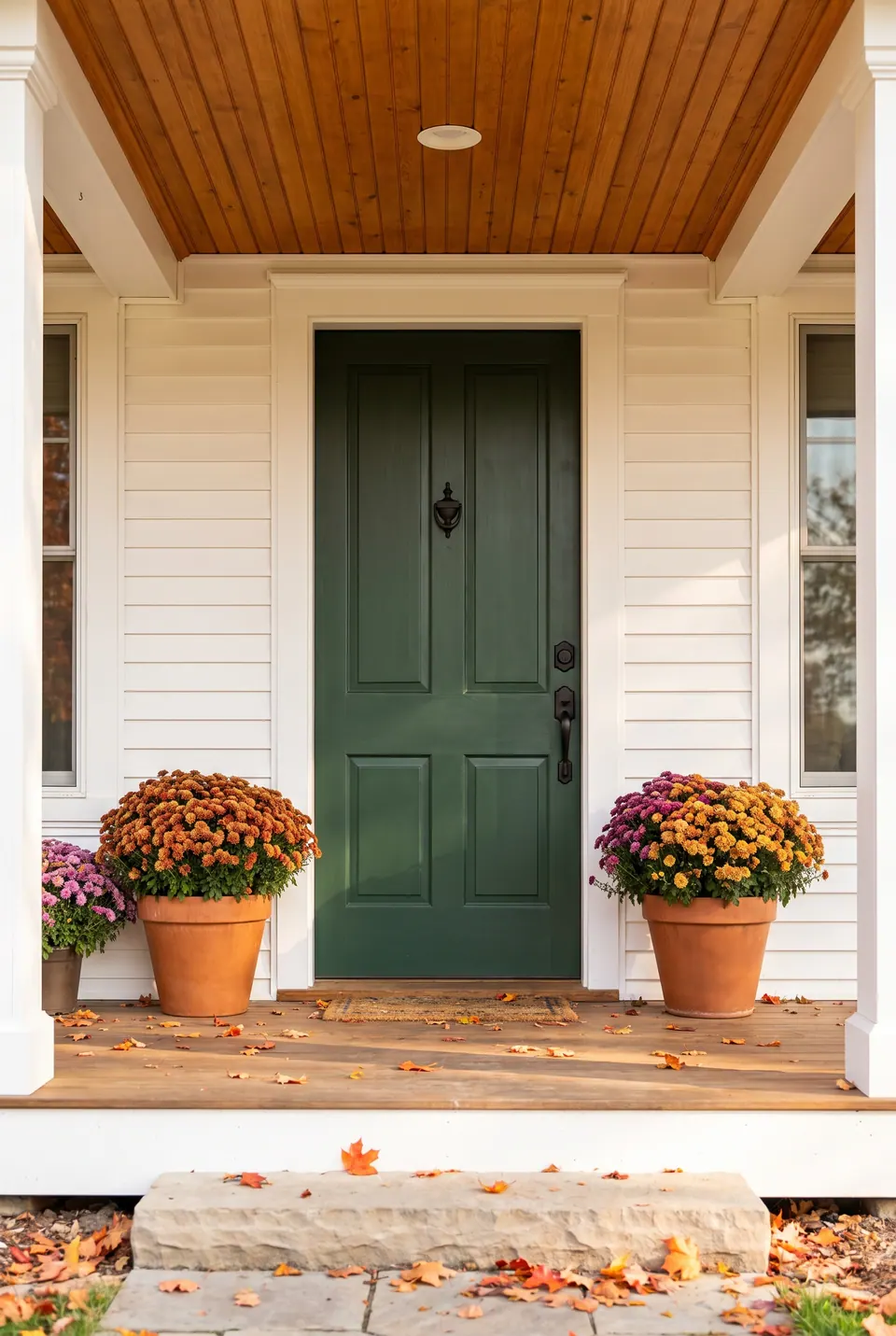
If there is one color trend that shows up on nearly every job, it is the deep green front door. Forest, hunter, a green so dark it reads black in the shade. Black is second, and a warm red is still around on the older farmhouse-style homes out toward Buffalo and Delano.
A door is the right place for a color you are excited about. It is a couple of hours to repaint, it faces the street, and the next owner can change it with one can. On a steel door that has chalked in the sun, we wash and scuff it first, because a fresh color over chalk will not hold through a winter of the door slamming shut. We brush doors in a waterborne enamel or pull them and spray them when the schedule allows, and we do them on a warm afternoon so the enamel cures before the door has to close for the night.
Black windows and trim contrast
Black window frames on a light house, or white trim on a dark house, is the contrast people are asking for. On a repaint with existing white vinyl windows, the honest answer is that painting vinyl window frames black is possible but it is a maintenance item; the frames get hot, the paint has to be a product made for it, and the operating parts will wear it. On aluminum-clad or wood windows it is a much better bet. We tell people that up front rather than after.
Inside: warm whites replaced cool gray
The cool gray walls that were on every new build and every flip from about 2012 to 2020 are being painted over. In a Minnesota house, with low winter sun and a north-facing room that gets no direct light for four months, a cool gray goes flat and slightly blue. People lived with it for a few winters and are done.
What is replacing it is a warm white or a soft greige on the main floor, with the trim, doors and ceilings in a white from the same family. The rooms read bigger and warmer, and the whole main floor in one color is easier to touch up and easier to photograph. This is what the new-construction finish sets we paint look like now: white walls, white ceilings, black window frames and stained or painted cabinetry doing the color work.
Cool whites still have a place in a south-facing room with a lot of glass, where a warm white can go yellow in July. That is the kind of thing a sample on the wall settles in a day.
Color moved to the cabinets and built-ins
The accent wall is mostly gone. The color went to the things with doors.
Deep green is the big one: on mudroom lockers, laundry cabinets, a powder-room wall with board and batten, kitchen islands and lower cabinets under a white upper run. Navy and a muted blue are close behind. These are sprayed cabinet painting jobs, doors and drawer fronts pulled and finished off site in a booth, boxes sprayed in place, in a waterborne enamel that cures hard enough to take a laundry basket sliding across it.
The other thing we see is wood coming back. Stained white oak and rift-sawn cabinetry with white walls is a look we finish often in new construction, and on remodels people are choosing to keep a good set of stained cabinets and paint everything around them instead.
How we help people choose
We are painters, and we will tell you what we see on other houses, but we are not going to pick your color for you from a fan deck on the front steps. What we do instead:
- Paint a large sample, two feet square or bigger, on the actual wall or the actual siding. A chip lies.
- Look at it three times: morning, midday and evening. Inside, put the same sample on a north wall and a south wall.
- Outside, put the sample next to the trim color, the roof and any brick or stone. A charcoal that looks great on a chip can fight a brown roof.
- Ask what the room or the house needs to do. A north-facing living room needs warmth. A south-facing kitchen with a wall of glass can take a cooler white.
- Pick the trim and ceiling white before the wall color, not after.
One more piece of advice we give on exteriors: spend the trend on the door and keep the body in a color you will still like in ten years, because the body is what you are committing to.
If you have two chips taped to the wall and cannot decide, send us a photo through the contact page and we’ll tell you which one we’d paint.
Want us to look at your house?
Text a few photos and tell us what you are after. We reply with a written estimate.
Related questionsStraight answers.
What exterior paint colors are popular in Minnesota in 2025?
Dark bodies with light trim: charcoal, deep green and navy siding with white, cream or off-white trim and black window frames. On cedar, that often shows up as a dark solid stain rather than paint. Deep green front doors are the single most requested color we see, followed by black. Light gray and beige bodies are what people are painting over.
Do dark exterior colors fade faster?
They show fading sooner, because there is more pigment to lose and the contrast with a fresh patch is obvious. South and west walls in Minnesota take the most sun and fade first. Premium exterior paints hold dark colors much better than older products. On vinyl, use a product rated for dark colors on vinyl, or the panels can heat and warp.
What interior wall colors are people choosing in 2025?
Warm whites and soft greige on the main floor, with the same white family carried onto ceilings and trim. Cool gray walls, which were everywhere from about 2012 to 2020, are being repainted. The color has moved to cabinets, islands, built-ins, mudroom lockers and laundry rooms, where a deep green or blue in sprayed enamel works without taking over the room.
How do I test a paint color before committing?
Paint a large sample, at least two feet square, on the actual surface, and look at it in the morning, at midday and in the evening. Inside, test on a north wall and a south wall because the same color reads cooler on the north. Outside, sample on the siding near the trim and the roof so you see the color against what it has to work with.